

In short
For most roofs, a dry ridge is better. It holds every ridge tile with mechanical fixings instead of relying on mortar, which can crack and let go within a few years. Since BS 5534 was revised in 2014, bedded ridge tiles are expected to be mechanically fixed anyway. Mortar still has a place on some listed and heritage roofs.
This is a job for our Roof Repairs service.
Why mortar ridges come loose
For years, ridge tiles were simply bedded on a line of sand and cement. It looks neat when it is new, but Marley says several factors can cause mortar to fail, "often within the first few years" of the roof being finished. Mortar shrinks, cracks as the roof moves, and washes out. Then the ridge tiles rock, and in a strong wind they can lift off.
If you have found a ridge tile on the lawn, or mortar crumbs in the gutter, this is usually why.
What the standard says now
The British Standard for slating and tiling, BS 5534, was revised in 2014. Marley quotes its technical lead saying the revision "made it clear that the tensile strength of mortar alone could no longer be relied upon", and that all bedded roof tiles and fittings should include mechanical fixings. So even a mortar ridge done properly today needs screws or clips as well.
The two options side by side
| Mortar ridge | Dry ridge | |
|---|---|---|
| What holds the tiles | Mortar, plus mechanical fixings to meet BS 5534 | Clips and screws to a ridge batten |
| Upkeep | Needs checking and repointing over time | Marley says dry fix needs minimal maintenance |
| Ventilation | None built in | Many systems include ridge ventilation |
| Look | Traditional mortar line | Neat, uniform finish |
When mortar is still right
Marley notes there are cases where mortar may still be needed, such as listed and heritage buildings. On some older houses we bed verges in mortar because that is what suits the roof. We will tell you which applies to yours.
What we fit
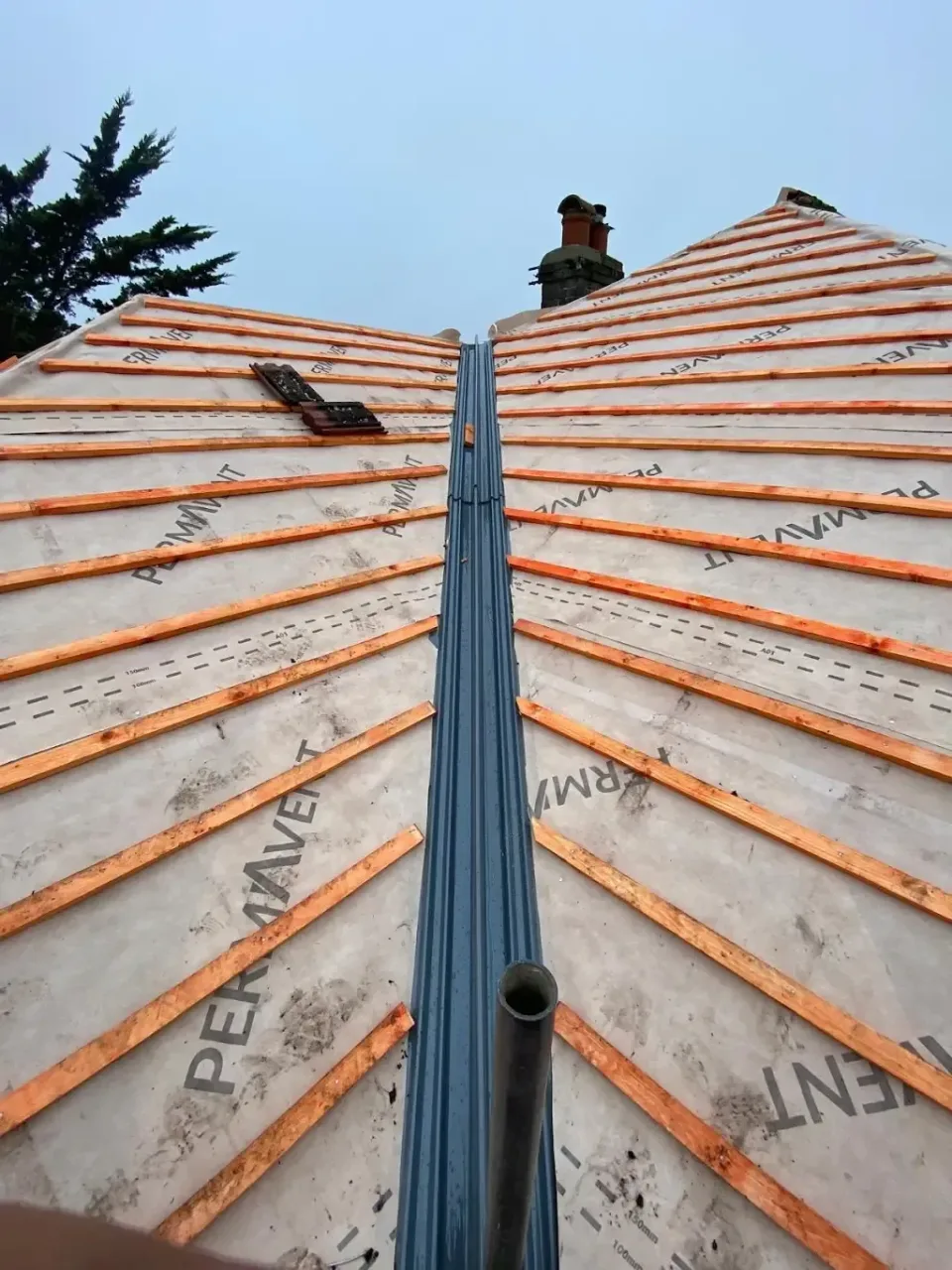
On new roofs and when a ridge needs redoing, we fit a dry ridge system as standard, usually with dry verges and dry valleys too. On one job a single loose ridge tile led to a whole new dry ridge with new ridge tiles, done from our own tower scaffold. If your verges are cement, they can often be done at the same time, which saves setting up access twice.